



Moving from Conductor to Audience Member: The Parenting Cycle

Musings by Sarah Brynteson - Mom & Astrologer
TRIGGER WARNING: This article contains a reference to the suicide of a parent. If this is a sensitive topic for you, please read with care — or feel free to step away and return when you are ready. You are not alone. If you are struggling, please reach out to the 988 Suicide & Crisis Lifeline by calling or texting 988.
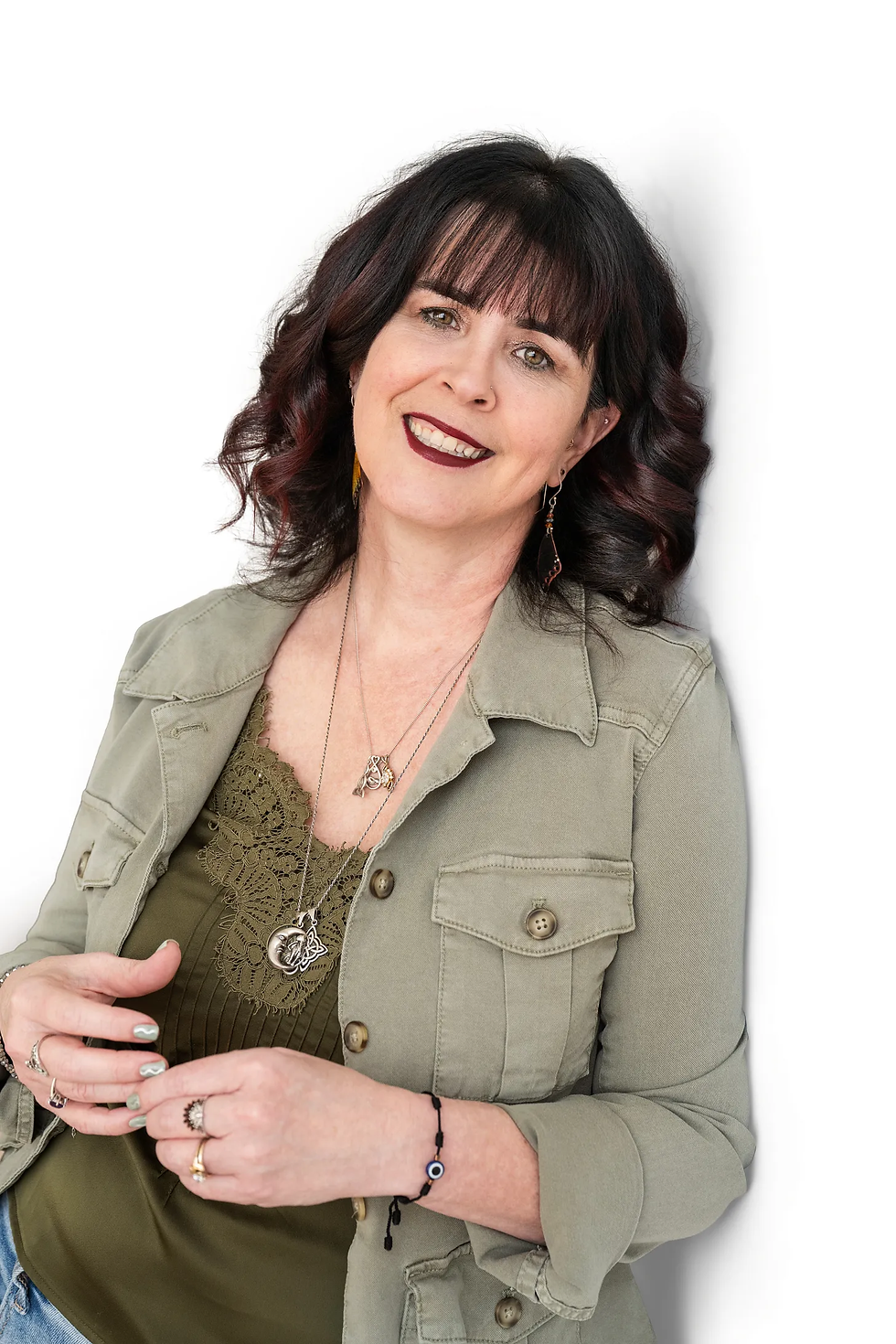
Hi, I'm Sarah Brynteson — mom, astrologer, and intuitive psychic guide, and the voice behind Written in the Stars. I help individuals understand their own energy through their birth chart, and I have a special love for helping parents understand their children's energy, too. I'm a graduate of the Debra Silverman School of Astrology, a former middle school teacher, and someone who believes, deeply, that dreams become reality when we choose to make it so. Today I'm sharing something close to my heart — a milestone that's arriving right on schedule and catching me by surprise anyway.
In the 5th grade I joined orchestra at Edgewood Elementary to play violin. I was always amazed at how the teacher could captivate the audience with the rise and fall of our notes and, at the same time, keep us all moving forward.

This experience was the same every time a new conductor or teacher would come in. Yes, their style may be different, but the end result is the same: music that moves the soul. It opens a part of us that maybe we didn’t know we needed to find — or a part that needed to be remembered.
Music can be sad or uplifting, and sometimes both within the same few measures. I’ve come to realize this is true of parenting, too.
So much of how we parent is a reflection of the parenting we ourselves received. So before I dive into how we move from conductor to audience member, I want to share a little bit about my journey.
Where it all began
To understand cycles, it is sometimes helpful to understand where it all began.
My childhood was not, shall we say, stereotypical.
My father passed away when I was 2 — by his own hand. I was always told growing up that he had a kind smile, a twinkle in his eye, and did amazing craftsmanship with wood. It was because of him, in part, that I became a reading teacher.
He grew up with dyslexia at a time when that wasn’t really understood or known how to work with. Unfortunately, likely because of that, he thought himself not to be very smart — even though he was gifted in so many ways. I know that when people do not feel good about themselves, they can develop a low self-concept. I know this because I have worked through it myself. As Ted Lasso said: “I am a work in prog-mess.” Aren’t we all, though.
We are all works in progress, after all — and he was no different.
What he left behind was my mom, carrying my sister and me — and figuring out how to move forward anyway.
At age 12, my mother told me the reason he did it was because he didn’t feel worthy of having a beautiful wife and child, with another on the way. She shared that he had wanted her to have an abortion and she had said no — that they would go into counseling and figure it out together. Instead, well, they didn’t.
My mother never remarried, though she came close once. She told me the reason that man didn’t want to marry her was that he didn’t want “baggage” — meaning my sister and me. That hurt. As I grew up I thought: if I am going to be baggage, I’m going to be expensive and worth it, like the name brands out there.
I grew up fearful that I would become an orphan. I knew that if my mother were to pass, I would go to live with my aunt or my godfather. Neither was close to home. Either would mean a big change.
When I turned 18 I thought: okay, if my mom passes now, at least I could take care of my sister. I went to college in St. Paul so it would be easy to work and go to school at the same time.
That’s where I met my husband Richard in 1995. We started dating in 1996. I knew in 1995 he was going to be the man I would marry — and that scared me — so I told him we had to be friends first.
That’s when life started to change.
A new life
We were friends for a year, and then in 1996 we decided to become a couple. When he asked me to marry him — hiding the ring in a scavenger-hunt kind of way — I said yes.

In 1999 we married at the ripe age of 23, both of us. We started a life together knowing we both wanted to someday be parents, among other things.
As we started to build our lives, for some reason I thought it would be best if we had our kids before we turned 30. First came our oldest in 2002, and then our family was complete in 2005. We were 26 and 29 when we had our kids. We did it, I thought. Things would be easier because we would have the energy to raise them — even though we were short on funds, starting out as a middle school teacher and a building tech in the same district. I don’t know if it was easier. Life certainly felt complete with our family of four.

Becoming the Conductor as a parent
As we raised our children, we did so the best we knew how at the time. We were both the oldest child in our families of origin, and neither of us came from what would be considered a traditional family, so we didn't have much of an example to go off of. We had each other, though, and we knew that would be enough.
While we were the conductors, we came to realize that our children were most certainly teaching us just as much — as the players in this orchestra.
When you are a parent of babies or littles, you are very much the conductor of their lives. You make sure they are taken care of in all the ways that matter: loved, nurtured, and provided for.
Since becoming a parent, here is some of what I've learned:
The first foods you eat also go to the baby if you are breastfeeding. If you can avoid chocolate and broccoli within the first hours of birth, your baby will be happier. I didn't know this — and our little one experienced gas and fussiness all because they were born around Valentine's Day and I hadn't known better!
We experienced our oldest having hearing problems that resulted in three tube surgeries to clear out "glue ears," and we had to advocate for speech therapy for a four-year-old as a result of not being able to hear properly. It is unusual for insurance to cover speech therapy at such a young age, and we thought we would have to wait until kindergarten for that support. Thankfully, we found a way.
Our youngest helped us figure out how to navigate food allergies and Oral Allergy Syndrome. He was at summer school in first grade when he developed red streaks on his face. I didn't know then that he was having an allergic reaction to apples. We learned soon enough what Oral Allergy Syndrome is and how to best support him.
We navigated struggles with reading for one child and not the other — which was humbling, especially as I was a reading teacher for fourteen years. It taught me that sometimes you need to invite a "guest conductor" in to offer a different perspective.
As a teacher I had summers off, so I kept them busy with community groups, time in the garden, and free events where they could play, dance, and make art.
Navigating Covid with our youngest still in high school while our oldest began their college journey — all while supporting the mental health of our whole family at the same time.
Being there for their firsts — concerts, sporting events, debate — and also their lasts at every level. Celebrating when they wanted to celebrate, and holding space when tears fell.
None of these came with a manual. We just figured it out together.
As parents, we tried so very hard to always make sure they knew and believed that we were there for them — and that we always would be.
Transition from conductor to audience member as a parent
In hindsight, I believe the shift from being their sole conductor — helping to orchestrate their lives and activities — started to happen when they were in high school. Lives become busier. Friends become their go-to person rather than us. That is the natural evolution of it all, isn’t it? It is important that our children find their own way in the world, and their friends can help support them.
The “guest conductors” — family members, teachers, mentors, and other adults in their lives — teach lessons of their own. Those guest conductor roles are essential for a well-rounded life. And we are guest conductors as well, to the children we interact with in our loved ones’ lives. It is a cycle that keeps going for as long as you want it to.
I noticed the transition most this year. It is May 9, 2026 as I write this article. Next Saturday, May 16th, our youngest will be graduating a year early from college, and his next chapter will begin.

The baton is being passed.
Our oldest has been conducting their own life for several years now. It started when they went to college during Covid and received their degree in 2023. They still come to us with questions, and we talk and text — the relationship has simply evolved. They have picked up the baton, and we are cheering them on in everything they do.
This is the same shift I am feeling with our youngest. With his graduation, he will be moving to another state to begin his doctorate. He needed to figure out how to find an apartment, set up utilities, get renter’s insurance — all of it. He told me this week: “Mom, I got this.” He has picked up the baton, and we are cheering him on in everything he does.

I believe both of them.
It doesn’t make it easy, though.
This shift from conductor to audience member is the best gift we can give our kids. That is what I hold onto.
What does being an audience member look like?
Good question. I’d love to share what I have learned — and if you have tips of your own, please leave them in the comments.
Ask before advising. When they call and need to talk, I ask: “Can I just clarify my role in this conversation? Do you want me to listen so you can vent, or would you like advice too? I just want to be what you need right now.” Then I wait. Many times, they just want to vent. It is okay to be that safe space.
Cheer them on — loudly. Even when they’re not looking (and especially when they are). Be proud out loud of who they are becoming. Your kids never stop wanting that. They may not always say thank you. They notice, though. Trust me.
Offer space instead of solutions. This has been and continues to be the hardest lesson for me. I was the peacemaker growing up — I did everything I could to keep the peace in a home that didn’t always feel peaceful. It was a habit I started early in life, and one I needed to let go of so that our children could fly on their own. I had to trust that what we taught them was enough, and let them know that if they ever did need help, we would be there in the wings — not jumping in to fix everything. Knowing your child can survive and thrive: that is what makes it all worthwhile.
Are we there yet?
No, we are not there yet.
We will always be our children’s parents. They will always be our children, even though they are adults to the rest of the world. We will always worry about them. We will always cheer them on. We will always be their biggest supporters and allies. This is a baton we will never pass to anyone.
A few things have helped along the way:
Having friends of our own who are going through the same stages we are.
Dating each other again so we can remember what it was like before we became parents.
For me personally, understanding the energies our children carry through their birth charts — learning how to communicate in a way that is heard on both sides, and how to be emotionally present for them.
Checking in with them while letting them live their lives.
The difference is simply this: we are no longer conducting their lives. We are shifting to the wings and into the seats where the audience sits. We may be asked to guest conduct from time to time.
If you are making this shift from conductor to audience member, know that there are plenty of seats next to me — and you don’t have to go through it alone.

We just get to clap louder together.
With love and stardust,
Sarah

If this article resonated with you, I invite you to subscribe to receive future musings. And if you'd like to explore what your child's birth chart reveals about their energy and how you can best support them, I'd love to help. Visit me at writteninthestars.me to book a consultation or join my membership community, Between the Moons, on Patreon.

Comments